Home
Explore Uedu
Student Console
Register as Member/Login
(2) In future presentations of the research findings, in addition to the course project website and public presentations, your real name and personal information will not appear in this research report. If you are interested in the research results, we can provide you with an executive summary after the study is completed.
問卷中心
Teacher Console
Course Setup
Support & Messages
Uptime Data

UeduGPTs

--

Jupyters

0

Local AI

--

CISOSE26 本地 AI UG26
政治大學 AQI 19 29°C

AI Reply Desktop Notifications

Show a desktop notification when the AI TA finishes replying

Chat Message Notifications

Notify me when classmates post messages in the forum

Sound notification

Play an alert sound whenever there is a new notification

Uedu Open / Advanced Thermodynamics
2.43

Advanced Thermodynamics

Prof. Gian Paolo Beretta | Spring 2024
Science & Math Chemistry Physics Energy, Climate & Sustainability Energy Engineering Chemical Engineering Mechanical Engineering
前往原始課程
CC BY-NC-SA 4.0
課程簡介
This course is a self-contained concise review of general thermodynamics concepts, multicomponent equilibrium properties, chemical equilibrium, electrochemical potentials, and chemical kinetics, as needed to introduce the methods of nonequilibrium thermodynamics and to provide a unified understanding of phase equilibria, transport, and nonequilibrium phenomena useful for future energy and climate engineering technologies. Applications include second-law efficiencies and methods to allocate primary energy consumptions and CO₂ emissions in cogeneration and hybrid power systems, minimum work of separation, maximum work of mixing, osmotic pressure and membrane equilibria, metastable states, spinodal decomposition, and Onsager’s near-equilibrium reciprocity in thermodiffusive, thermoelectric, and electrokinetic cross effects.

Course Information
SourceMIT 開放式課程
科系Mechanical Engineering
LanguageEnglish
影片數25
課程影片 (25)
1
Lecture 1: Definitions of System, Property, State, and Weight Process; First Law and Energy
2
Lecture 2: Second Law and Entropy; Adiabatic Availability; Maximum Entropy Principle
3
Lecture 3: Energy vs Entropy Diagrams to Represent Equilibrium and Nonequilibrium States
4
Lecture 4: Temperature, Pressure, Chemical Potentials; the Clausius Statement of the Second Law
5
Lecture 5: Definition of Heat Interaction; First and Second Law Efficiencies
6
Lecture 6: Free Energies, Available Energies, and Stability Conditions
7
Lecture 7: Availability Functions and the LeChatelier-Braun Principle
8
Lecture 8: Few versus Many Particles: The Euler Relation; Review of Various Forms of Exergy (Part I)
9
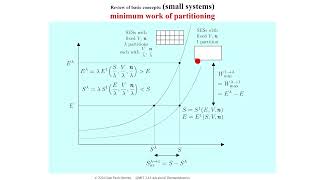
Lecture 9: Minimum Work of Partitioning Small Systems; The Gibbs Phase Rule; The Van der Waals Model
10
Lecture 10: Review of Various Forms of Exergy (Part II); Allocation of Consumptions in Cogeneration
11
Lecture 11: Allocation in Hybrid Power Production; Chemical Potentials and Partial Pressures
12
Lecture 12: Ideal Mixture Behavior; Work from Reversible Mixing; Entropy of Irreversible Mixing
13
Lecture 13: The Gibbs Paradox; Shannon Information Entropy; Single Quantum Particle in a Box
14
Lecture 14: Ideal Solution Model; Osmotic Pressure; Blue Energy; Minimum Work of Separation
15
Lecture 15: Stratification in Gas and Liquid Mixtures; Liquid-Vapor Spinodal Decomposition
16
Lecture 16: Liquid-Vapor Equilibria in Mixtures; Ideal and Excess Chemical Potentials
17
Lecture 17: Liquid-Liquid Spinodal Decomposition; Introduction to Systems with Chemical Reactions
18
Lecture 18: Properties of Reaction; Heating Values and Exergy of Fuels; Adiabatic Flame Temperature
19
Lecture 19: Affinity and Nonequilibrium Law of Mass Action; Potential Energy Surface
20
Lecture 20: Chemical Kinetics; The Arrhenius Law; Degree of Disequilibrium; Principle of...
21
Lecture 21: Introduction to Nonequilibrium Theory; Onsager Reciprocity and Maximum Entropy...
22
Lecture 22: Definition of “Heat&Diffusion” Interaction; Diffusive and Convective Fluxes
23
Lecture 23: Direct and Cross Effects; General Principles of Entropy Production; The Fourth Law
24
Lecture 24: Relative Diffusion Fluxes; Thermoelectric Effects
25
Lecture 25: Thermodiffusive Effects; Multicomponent Transport